
A nonprofit team was just days away from filing.
Everything seemed ready. Financials were prepared. The return was mostly complete.
Then one small question came up:
“Wait… are these funds actually restricted or unrestricted?”
That one question led to another.
And another.
Within a few hours, they realized:
- donor documentation wasn’t fully organized
- a few grant allocations didn’t match reporting
- board approval hadn’t been formally documented
The filing didn’t go out that week.
Not because the organization wasn’t doing good work
…but because the details behind the reporting weren’t fully aligned.
If you’re preparing your Form 990 right now, this is more common than you think.
If any of this sounds familiar, you’re not alone:
- You’re pulling information from multiple places at the last minute
- Certain numbers don’t fully tie out the way you expected
- You’re unsure if documentation is complete or just “good enough”
- Approvals or internal reviews are still pending
This isn’t a preparation problem. It’s a coordination problem.
Why Last-Minute Issues Happen With Form 990
Form 990 is not just a tax filing.
It reflects:
- how your organization tracks funds
- how clearly your financials are structured
- how well your internal processes are documented
Most nonprofits don’t struggle because they lack information.
They struggle because:
- data lives in different systems
- reporting isn’t aligned throughout the year
- documentation is gathered reactively instead of proactively
That’s why everything feels fine… until the final review.
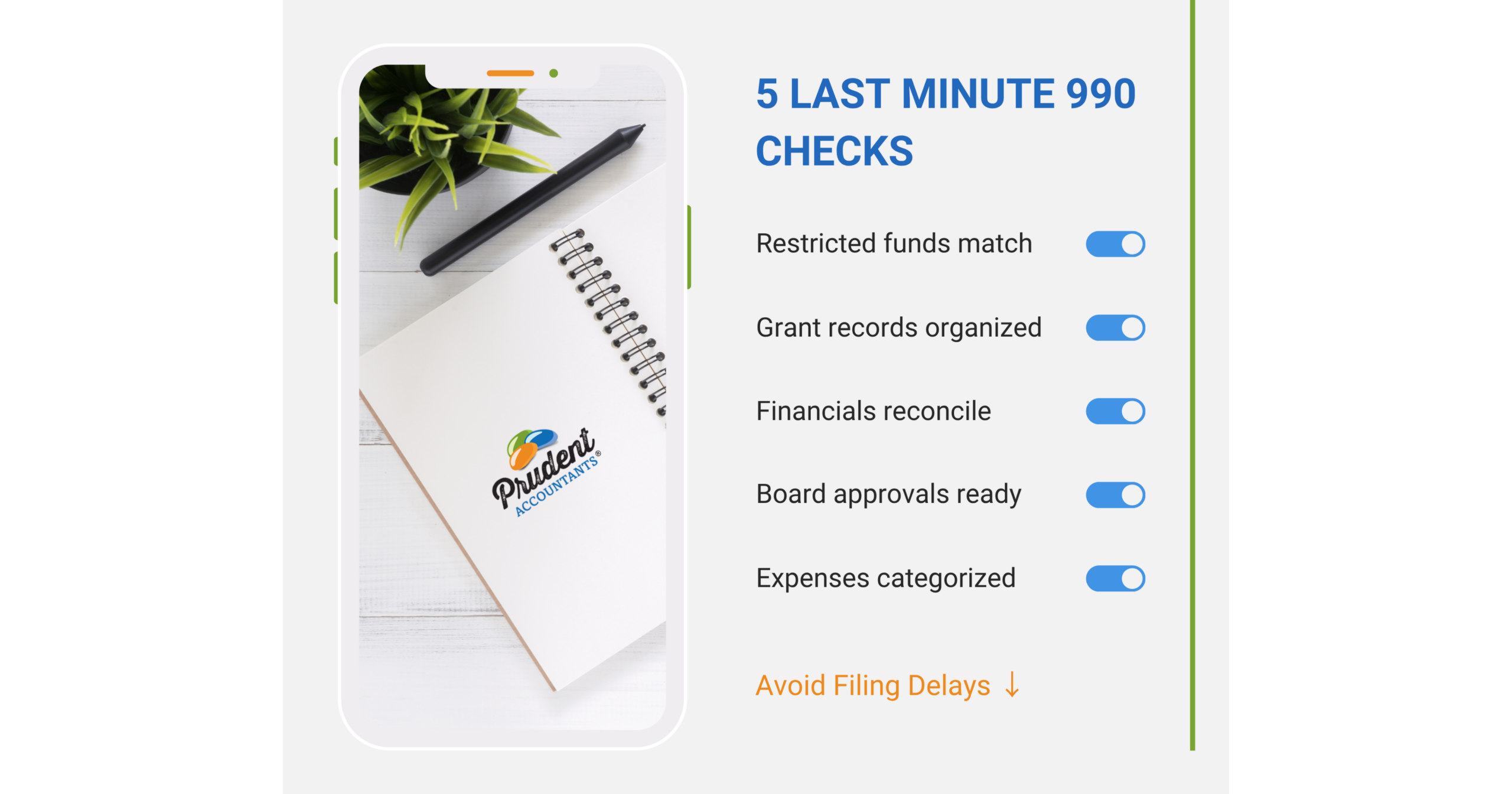
5 Things to Double-Check Before You File Your 990
These are the areas that most often cause delays, revisions, or compliance risk.
1. Restricted vs Unrestricted Funds Are Clearly Classified
This is one of the most common last-minute issues.
What to check:
- Are donor restrictions clearly documented?
- Do your financials reflect those restrictions accurately?
- Do your reports match how funds were actually used?
Why it matters:
Misclassification can impact how your organization is viewed by regulators, grantors, and the public.
2. Donor and Grant Documentation Is Complete
It’s not just about totals. It’s about support.
What to check:
- Major donations have proper documentation
- Grant agreements match how funds were recorded
- Any conditions tied to funding are reflected correctly
Quick insight:
Many nonprofits track donations well, but struggle to connect documentation to reporting when filing.
3. Financials Fully Reconcile Across Reports
Your numbers should tell one consistent story.
What to check:
- Internal financials match what’s being reported on the 990
- Revenue and expenses tie out across statements
- No unexplained differences between reports
Why this matters:
Even small inconsistencies can slow down filing or raise questions later.
4. Board Approvals and Governance Are Documented
This is often overlooked until the final step.
What to check:
- Board review of financials is documented
- Key decisions are recorded in meeting minutes
- Governance processes align with what is reported
Form 990 is not just financial. It reflects how your organization is run.
5. Reporting Reflects What Actually Happened
This sounds obvious, but it’s where many issues surface.
What to check:
- Program expenses are accurately categorized
- Allocations reflect real activity, not estimates
- Year-end adjustments are fully captured
CPA Insight:
Many filings get delayed not because numbers are missing, but because they don’t fully reflect reality once reviewed closely.
A Quick Example
A nonprofit we worked with was preparing their 990 close to the deadline.
Everything looked complete at first.
But after a deeper review:
- one grant had usage restrictions that weren’t reflected in reporting
- program expenses were grouped too broadly
- documentation for a major donation was incomplete
None of these were major issues individually.
But together, they created enough uncertainty to delay filing.
Once everything was aligned:
- reporting became clearer
- documentation supported every number
- the filing process became significantly smoother
The difference wasn’t more effort.
It was better alignment.
What To Do Right Now
If you’re close to filing, don’t just focus on finishing.
Focus on confirming.
Take time to:
- review classifications carefully
- ensure documentation supports your numbers
- confirm approvals and governance details
- reconcile reports fully
These steps don’t take long, but they prevent delays and reduce future risk.
Frequently Asked Questions
What should I check before filing Form 990?
You should review fund classifications, donor documentation, financial reconciliations, board approvals, and ensure your reporting reflects actual activity. These are the most common areas where issues arise.
Why is my Form 990 taking so long to prepare?
Delays usually happen when information is incomplete or not aligned. Missing documentation, unclear classifications, or unreconciled financials are the most common reasons.
What are common mistakes when filing Form 990?
Common mistakes include misclassifying restricted funds, missing donor documentation, inconsistent financial reporting, and lack of proper governance records.
Do nonprofits need board approval before filing Form 990?
Yes, best practice is for the board to review the Form 990 before it is filed. This ensures transparency and proper governance.
What happens if my Form 990 has errors?
Errors can lead to amended filings, increased scrutiny, or compliance concerns. It’s better to take time upfront to ensure accuracy.
Final Thought
Filing your Form 990 is not just about meeting a deadline.
It’s a reflection of how your organization operates behind the scenes.
When everything is aligned, the process feels smooth and controlled.
When it’s not, small gaps quickly turn into bigger issues.
If you’re close to filing and things feel rushed or uncertain, it may be time to step back and make sure everything is truly aligned, not just completed, which is exactly where the right support can make the process far more clear and manageable.



0 Comments