
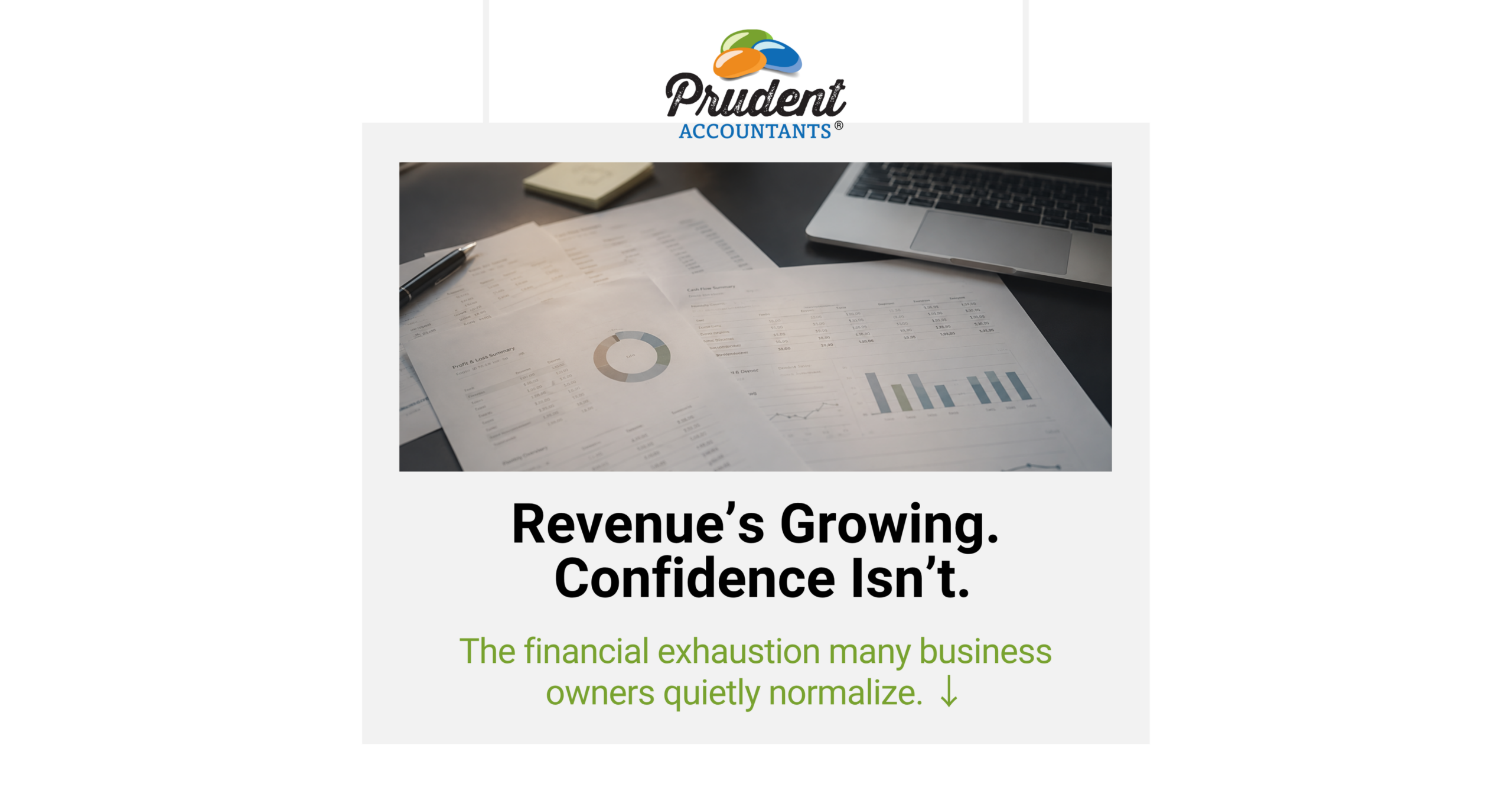
One of the clearest signs a small business is operating reactively?
The owner checks the bank account before making decisions more often than they check actual financial reports.
Not because they are irresponsible.
Because the reports never felt clear enough to trust in real time.
And honestly, this is far more common than people realize.
Many small business owners are working harder than ever, bringing in more revenue than ever, and still ending most months feeling like they are one unexpected expense away from falling behind again.
From the outside, the business may look successful.
Clients are coming in. The team is busy. Revenue is growing.
But internally?
Hiring decisions feel stressful. Pricing feels uncertain. Cash flow feels inconsistent. Taxes feel reactive. Financial decisions take too long. And even simple business choices start carrying unnecessary pressure.
A lot of small business owners quietly live in this cycle for years.
Not because they are bad at business.
Because they are operating without strong financial visibility.
And that changes everything.
Many Small Business Owners Think They Need More Revenue
In reality, many simply need clearer visibility into the revenue they already have.
That distinction matters more than most people realize.
One of the biggest misconceptions in small business ownership is assuming growth automatically creates financial clarity.
Sometimes growth actually creates more confusion.
More revenue often brings:
- larger payroll obligations
- rising overhead costs
- more subscriptions and software expenses
- additional tax exposure
- inconsistent cash flow timing
- pricing pressure
- more operational complexity
- faster hiring decisions
- tighter margins hiding beneath higher sales
This is why some growing small businesses experience their highest revenue year ever while simultaneously feeling financially overwhelmed.
The issue usually is not effort.
The issue is visibility.
Why Growing Small Businesses Still Struggle with Cash Flow and Financial Clarity
This problem usually starts quietly.
A business owner delays hiring because they are unsure what the business can realistically afford.
Marketing investments get postponed because ROI feels unclear.
Pricing stays untouched for years despite rising costs.
Financial reports exist, but nobody uses them strategically because they feel disconnected from real operations.
Eventually, business leadership becomes reactive instead of proactive.
And reactive businesses almost always feel exhausted, even when they are technically growing.
A Real Example Many Small Business Owners Relate to
An example based on situations commonly seen across growing small businesses:
Ashley owns a growing marketing agency with a small team.
Revenue increased nearly 30% in one year, which sounded exciting on paper. But internally, she still felt financially stressed almost every month.
She checked the bank balance constantly before approving expenses.
Hiring decisions felt risky.
Quarterly taxes kept catching her off guard.
Projects were coming in, but profits still felt unpredictable somehow.
One month, Ashley delayed replacing a team member’s broken laptop for almost three weeks because cash flow felt uncertain.
Later, after implementing proper forecasting and cleaner financial reporting, she realized the business could have comfortably handled the expense the entire time.
The stress came from uncertainty, not reality.
And that is exactly where many small business owners get stuck.
The problem was not that the business was failing.
The problem was that the financial systems were built for recording transactions, not helping leadership make confident decisions.
Once reporting became cleaner and cash flow visibility improved, everything changed.
Instead of constantly asking:
“Can the business survive this?”
The conversation became:
“How can the business grow smarter?”
That shift changes the entire energy of a business.
Signs Your Small Business May Be Operating Reactively
A lot of business owners normalize financial stress because it has existed for so long.
But these are usually signs the business lacks strong financial visibility:
- decisions are mostly based on the bank balance
- taxes feel surprising every quarter
- pricing has not been reviewed recently
- hiring feels emotionally stressful
- cash flow feels unclear month to month
- reports exist but rarely influence decisions
- revenue is growing but confidence is not
- there is no clear forecasting process
- payroll timing creates anxiety
- profitability feels inconsistent despite strong sales
If several of these feel familiar, the business may not have a revenue problem.
It may have a visibility problem.
A Quiet Financial Red Flag Many Small Businesses Miss
One of the biggest financial misconceptions small business owners have is assuming “busy” automatically means profitable.
It does not.
Some businesses become busier every year while margins quietly shrink underneath the surface.
This happens more often than people realize because:
- labor costs increase
- software expenses stack up
- pricing remains outdated
- inefficient services continue
- operational waste grows slowly over time
Without strong financial reporting and profitability visibility, these issues can stay hidden for years.
This is one reason many small business owners feel exhausted despite growing revenue.
The business is growing operationally.
But not strategically.
The Hidden Cost of Unclear Financials
Most people assume financial disorganization only affects accounting.
It affects far more than that.
It affects leadership energy.
When financial visibility is weak, business owners often experience:
- slower decision making
- emotional burnout
- reactive hiring
- underpricing
- poor cash reserves
- tax surprises
- inconsistent profitability
- stress around payroll timing
- difficulty planning ahead confidently
And eventually, many owners stop trusting the numbers entirely.
That is where instinct starts replacing strategy.
Instinct matters in business.
But instinct works best when paired with accurate financial clarity.
Why Many Growing Small Businesses Outgrow Basic Bookkeeping
Basic bookkeeping keeps records organized.
But growing small businesses eventually need more than organized records.
They need answers.
Questions business owners actually ask every week:
- Can another employee realistically be hired right now?
- Which service is actually producing the best margins?
- Why does revenue look healthy while cash still feels tight?
- How much should realistically be set aside for taxes?
- Is pricing still profitable after inflation and rising payroll costs?
- What happens if revenue slows down next quarter?
- Which operational expenses are quietly hurting profitability?
This is where many small businesses realize they need stronger financial strategy, not just bookkeeping alone.
And this is exactly why fractional CFO services have become significantly more valuable for growing businesses.
What Fractional CFO Level Guidance Actually Helps With
A lot of business owners hear “fractional CFO” and assume it only applies to large corporations.
That is no longer true.
For growing small businesses, fractional CFO support often means finally having financial visibility clear enough to make proactive decisions confidently.
That can include:
- cash flow forecasting
- profitability analysis
- pricing strategy support
- tax planning visibility
- budgeting guidance
- hiring affordability analysis
- growth planning
- operational KPI tracking
- financial reporting clarity
- identifying inefficiencies before they become larger problems
The goal is not just creating reports.
The goal is helping business owners feel more confident leading the business.
That emotional shift is massive.
One of the Biggest Financial Mistakes Small Business Owners Make
Many small business owners only review finances during:
- tax season
- payroll runs
- emergencies
- low cash months
- major purchases
Strong businesses review financial performance proactively instead of reactively.
For example:
A business generating strong revenue may still struggle because:
- receivables are slow
- pricing is outdated
- payroll timing is misaligned
- margins are shrinking
- taxes were never planned for properly
These issues often stay invisible until financial visibility improves.
And once owners finally see the business clearly, they usually say the same thing:
“I wish this had been set up earlier.”
Practical Ways Small Business Owners Can Improve Financial Visibility
The good news?
Improving financial visibility does not always require massive changes.
Sometimes small operational improvements create huge clarity.
Build Monthly Cash Flow Reviews
Do not just review profit and loss statements.
Review:
- expected incoming cash
- payroll timing
- recurring expenses
- tax obligations
- upcoming large costs
- seasonal fluctuations
Cash flow timing matters more than many small business owners realize.
Separate Tax Reporting From Operational Reporting
Tax reports help file taxes.
Operational reports help run businesses.
Growing businesses need visibility into:
- profitability trends
- service margins
- labor costs
- forecasting
- growth pacing
- operational efficiency
Those are very different conversations.
Review Pricing More Often Than Feels Comfortable
Many businesses quietly lose profitability because pricing never evolves alongside rising expenses.
One pricing review alone can significantly improve long term cash flow confidence.
Create Reports That Actually Answer Questions
Many business owners receive reports that technically look correct but provide no real operational clarity.
Good reporting should help answer:
- What is improving?
- What is becoming inefficient?
- What decisions can confidently be made next?
The goal is clarity.
Not more spreadsheets nobody uses.
The Small Business Owners Who Feel “Ahead” Usually Are Not Guessing Less
They are simply seeing more clearly.
That is the real difference.
The calmest small business owners are not always the smartest or luckiest.
Usually, they just have:
- cleaner financial systems
- stronger cash flow visibility
- proactive forecasting
- clearer operational reporting
- better tax planning
- strategic financial guidance
- consistent monthly visibility
That creates confidence.
And confidence changes how businesses grow.
Final Thoughts
If running the business constantly feels reactive, financially unclear, or emotionally exhausting even while revenue grows, that feeling is usually trying to point toward something important.
Most small business owners do not necessarily need to work harder.
They need stronger financial visibility into how the business is actually operating.
Because once financial clarity improves:
- hiring decisions become easier
- pricing becomes smarter
- growth feels less risky
- cash flow becomes more manageable
- tax planning becomes proactive
- leadership becomes calmer and more strategic
And most importantly?
Business ownership starts feeling sustainable again.
At Prudent Accountants, a major focus is helping growing small businesses move from reactive financial decision making to proactive planning through integrated bookkeeping, tax strategy, cash flow visibility, and fractional CFO level guidance designed specifically for businesses that want clearer direction and smarter growth.
Frequently Asked Questions
Why Do Small Business Owners Feel Financially Stressed Even When Revenue Is Growing?
Growing revenue does not automatically create healthy cash flow or financial clarity. Rising payroll, operational costs, taxes, pricing issues, and poor visibility can all create stress even during growth periods.
What Is Financial Visibility for a Small Business?
Financial visibility means clearly understanding how the business is performing in real time, including cash flow, profitability, expenses, margins, forecasting, and operational trends.
What Does a Fractional CFO Do for a Small Business?
A fractional CFO helps businesses improve cash flow planning, forecasting, profitability analysis, budgeting, pricing strategy, financial reporting, and long term growth decision making without hiring a full time CFO.
Why Does My Business Look Profitable but Still Feel Cash Poor?
Profit and cash flow are different. Businesses can appear profitable while still struggling with slow receivables, payroll timing, taxes, debt payments, or inconsistent expense timing.
How Often Should Small Business Financial Reports Be Reviewed?
Most growing small businesses should review financial reports monthly at minimum. Businesses experiencing rapid growth may benefit from weekly cash flow reviews and forecasting.
What Financial Reports Should Small Business Owners Actually Review?
The most useful reports often include:
- profit and loss statements
- cash flow reports
- accounts receivable aging
- profitability by service
- labor cost analysis
- forecasting reports
- budget versus actual comparisons
How Do Small Businesses Become More Proactive Financially?
Businesses become more proactive by improving financial visibility, forecasting cash flow regularly, reviewing profitability consistently, updating pricing strategically, and using financial reporting to guide decisions before problems appear.
When Should a Small Business Consider Fractional CFO Services?
Many businesses benefit from fractional CFO guidance once growth increases complexity, hiring decisions become harder, cash flow feels inconsistent, or leadership starts relying too heavily on guessing instead of clear financial reporting.



0 Comments