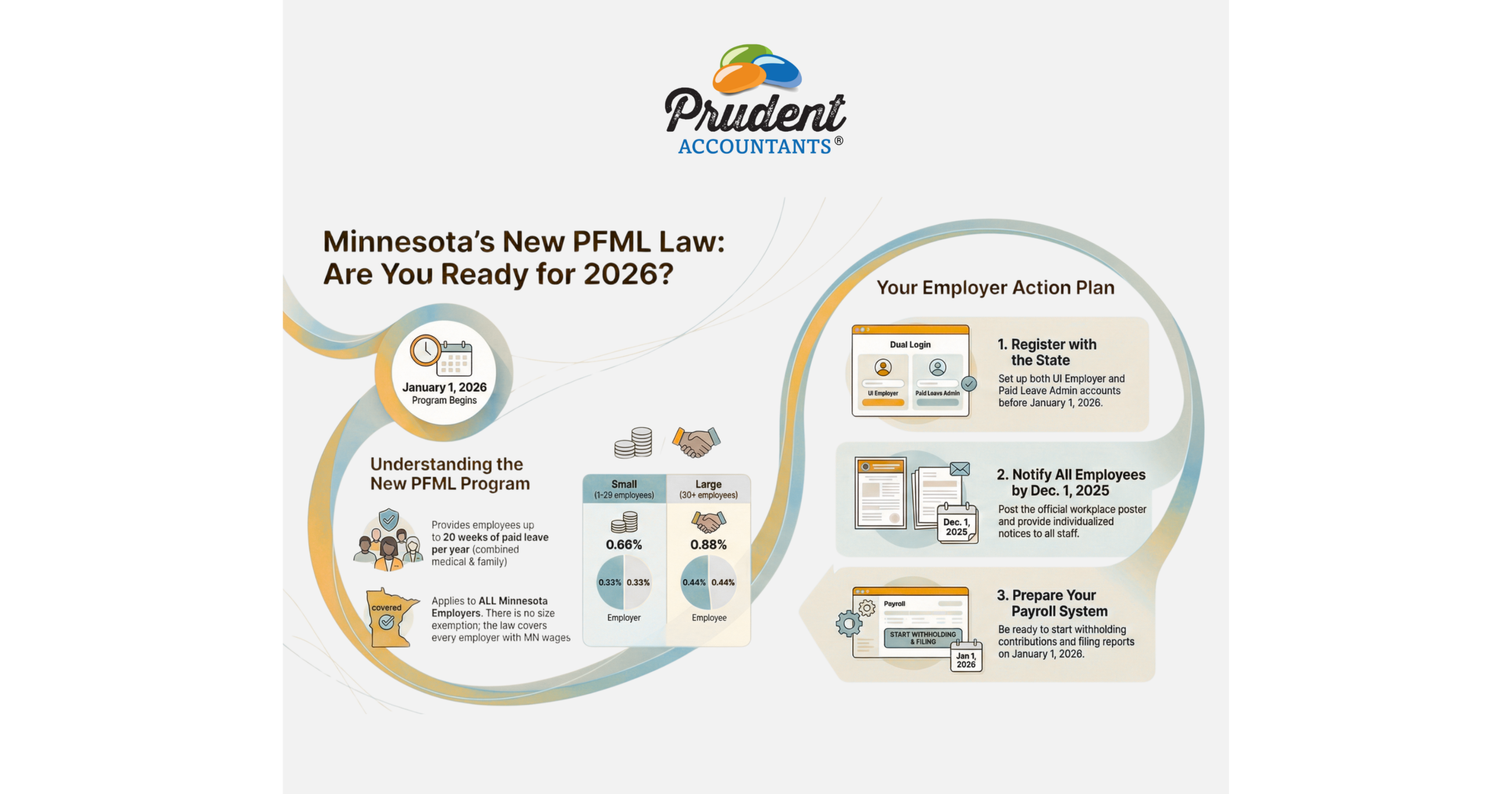
Starting January 1, 2026, Minnesota’s new Paid Family & Medical Leave (PFML) program becomes mandatory for most employers. While the goal of the program is to support employees
during major life events, the administrative responsibility falls squarely on businesses.
If you wait too long to prepare, compliance can become stressful and costly. This guide explains what the law requires, why it matters, and what small businesses should be doing now, in plain English.
What Is Minnesota Paid Leave?
Minnesota Paid Leave is a state-run social insurance program that allows employees to take paid time off for:
- Their own serious medical condition
- Caring for a family member
- Bonding with a new child
- Certain military-related events
Employees can receive up to 12 weeks for medical leave, 12 weeks for family leave, and up to 20 weeks combined per year, depending on the situation. Benefits can replace up to 90% of
wages, with a weekly maximum set by the state.
Why This Matters for Small Businesses
Even though the state administers employee benefits, employers are responsible for compliance. That includes:
- Registering with the state
- Withholding and remitting premiums
- Issuing required employee notices
- Maintaining records and acknowledgements
- Protecting employee rights during leave
Missing steps or mishandling payroll deductions can lead to penalties, disputes, or compliance audits.
How the Program Is Funded
Paid Leave is funded through payroll premiums based on employee wages (up to the Social Security wage cap).
- Standard employers pay a total premium of 0.88%
- Small employers (30 or fewer employees) pay 0.66%
The premium is split between medical leave and family leave, and employers decide how much of the cost is deducted from employees, within legal limits.
The Premium Split Decision (An Early Action Item)
Employers must choose how to split the premium between themselves and employees.
Important rule:
- You can never deduct more than 0.44% from employee wages, regardless of business
size.
This decision must be: - Documented
- Communicated clearly to employees
- Included in official notices
Once communicated, it becomes part of your compliance record.
Employee Protections You Must Follow
The law includes strict employee protections that employers must honor:
- Job protection after 90 days of employment
- Health insurance continuation during leave
- No retaliation or interference for using Paid Leave
These protections are mandatory and enforced by the state.
Key Dates You Cannot Miss
Here is the compliance timeline every small business should know:
- Now: Make policy and payroll decisions
- By December 1, 2025:
◦ Provide written Paid Leave notices to all employees
◦ Post the official workplace poster - January 1, 2026:
◦ Begin payroll deductions
◦ Start quarterly reporting and payments
Late notices or missing documentation can trigger compliance issues.
Required Accounts You Must Set Up
Businesses must create two separate but connected state accounts:
- Employer (UI) Account
◦ Used for wage reporting and premium payments - Paid Leave Administrator Account
◦ Used to manage leave determinations and filings
Both accounts are required to operate legally under the program.
Employee Notices: A Common Trouble Spot
Employers must:
- Post the official Paid Leave workplace poster
- Provide individual written notices to every employee
- Deliver notices in the employee’s primary language
- Keep proof that each employee received the notice
The state may request these records later, so documentation matters.
Payroll Setup and Ongoing Reporting
Starting with the first payroll of 2026, businesses must:
- Withhold employee premiums correctly
- Pay the employer portion
- File quarterly wage detail reports
- Remit total premiums to the state
Payroll systems often need advance configuration to handle this accurately.
Policy Decisions You Control
Beyond minimum requirements, employers must define how Paid Leave works with existing policies, such as:
- Whether employees can “top off” wages using PTO
- How intermittent leave will be handled
- Minimum increments for leave usage
These decisions must be written, consistent, and communicated clearly.
Why Many Small Businesses Seek Support
Minnesota Paid Leave touches payroll, HR, compliance, and documentation all at once. For small businesses without dedicated compliance staff, this can be overwhelming.
Common challenges include:
- Incorrect payroll deductions
- Missed notices or acknowledgements
- Inconsistent policy application
- Reporting errors
Preparing early helps avoid costly corrections later.
Final Thoughts for Minnesota Small Businesses
Minnesota Paid Leave is not optional, and it is not simple. However, with early planning, clear decisions, and proper setup, it does not have to disrupt your business.
Understanding the requirements now gives you time to:
- Make informed payroll decisions
- Communicate clearly with employees
- Set up systems correctly before deadlines arrive
For many small businesses, having guidance during this process provides clarity and peace of mind.
Prudent’s PFML Compliance Support Package
Many small businesses prefer expert guidance to ensure full compliance and avoid penalties. To make this transition smooth, Prudent offers a comprehensive
PFML Compliance Support Package designed to support employers before and after Paid Leave begins.
What We’ll Handle for You
- PFML setup and guidance for UI and Paid Leave administrator accounts
- Configuration and verification of contribution splits
- Payroll deduction accuracy review
- Assistance with exemption or private plan filings when applicable
- Preparation of required employee notices
- Ongoing compliance alerts and advisory support
- Clear documentation so audits and verifications are simple
Prudent is here to make your PFML transition simple, compliant, and stress free.
If you would like to activate PFML support, please contact us.


0 Comments